Affiliate disclosure: We may earn a commission from purchases through links on this page.
Ashwagandha has shown promising results in some small human trials involving testosterone, stress and strength training. The effects depend on the preparation, population and outcome measured. Current evidence supports a cautious discussion rather than a promise that an ashwagandha supplement will raise your testosterone, build muscle or correct persistent fatigue.

What the testosterone research shows
An eight-week randomized trial enrolled 57 men with little resistance-training experience. Those assigned to the studied ashwagandha root extract had larger increases in strength and serum testosterone than the placebo group. This is an encouraging finding, but a short trial in novice trainees cannot predict the response of experienced lifters or establish that a different commercial blend works the same way.
A 2019 crossover trial enrolled 57 overweight men aged 40–70 with fatigue, with 43 completing both periods. Eight weeks of the tested extract produced higher salivary testosterone than placebo, but improvements in fatigue, vigor and sexual well-being did not significantly exceed placebo. A laboratory difference and a noticeable benefit are separate outcomes.
Results are not uniformly positive. In a 60-day trial in 60 mildly anxious adults, the testosterone change among men did not significantly differ from placebo. Reporting only the increase within the supplement group would overstate the evidence.
What this means for training decisions
Compare the studied plant part, extract, dose, duration and participants with the product and goal you have in mind. An ingredient name alone cannot establish that two preparations are equivalent. These trials used repeated supplementation over weeks; they do not establish a same-day testosterone or motivation effect from taking ashwagandha before a workout.
Stress scores, cortisol concentrations, testosterone and strength are different measurements. An improvement in one does not prove the others will improve. Treat claims of faster repair, effortless fat loss or a guaranteed hormone response with caution unless the exact outcome and formula have been tested.
Safety deserves equal attention
The NIH ashwagandha fact sheet describes nausea, loose stools and drowsiness, reports of liver injury, possible thyroid effects and uncertainty about long-term safety. Potential interactions include thyroid, diabetes and blood-pressure medicines, sedatives and immunosuppressants. Avoid use during pregnancy or breastfeeding; people with hormone-sensitive prostate cancer should also avoid it.
Discuss existing liver or thyroid disease and all medicines with a clinician before considering use. Combining several botanicals or a pre-workout does not remove their individual risks. A routine cycling schedule cannot be assumed to prevent adverse effects.
Product references and current labels
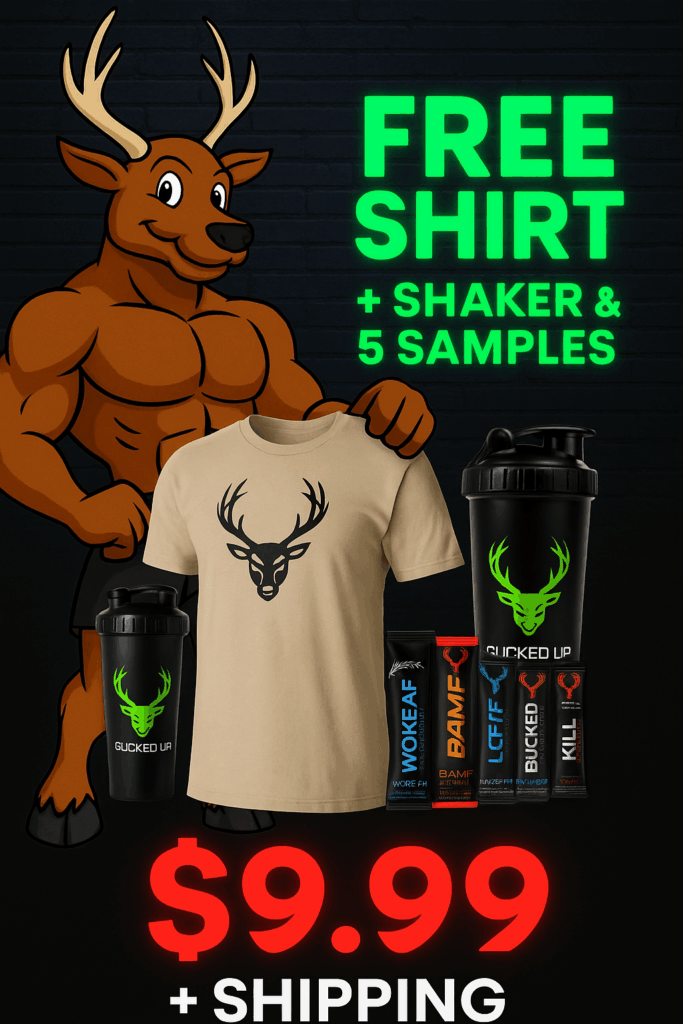
The RUT product page and Bucked Up Original pre-workout listing are shopping references. This article does not verify their current ingredients or doses. Check the current labels before assuming either contains the preparation used in a study.
The RUT retailer listing provides another product reference. The accompanying image shows a RUT bottle and box; it is not a clinical endorsement or proof of a testosterone effect. Use the Bucked Up shopping link to review current offers and confirm the final price, terms and exclusions at checkout.
When to ask about testing
Persistent low libido, unexplained fatigue or other symptoms warrant medical evaluation. The Endocrine Society requires compatible symptoms and repeatedly low testosterone, confirmed with morning fasting measurements, for a diagnosis of hypogonadism. A supplement response or a disappointing workout cannot establish that diagnosis.
Evidence reviewed October 10, 2026. This article is general information, not individualized medical advice. Confirm the current product label and purchase terms before buying.