Affiliate disclosure: We may earn a commission from purchases through links on this page.
Collagen is often promoted for muscle recovery, but the useful question is what a study actually measured. Muscle protein synthesis, soreness, strength recovery and tendon healing are different outcomes. A claim about one does not establish all the others.

What the post-exercise trial found
In a randomized trial of 45 recreational athletes, participants received whey, collagen or placebo after resistance exercise. Over five hours, whey increased myofibrillar protein synthesis above exercise alone; collagen did not. Neither protein significantly increased muscle connective-protein synthesis above exercise alone.
This was an acute experiment, not a long-term test of muscle growth, soreness relief or injury prevention. The findings also do not establish that whey and collagen differed significantly from each other for every outcome. They should not be stretched into a verdict on every possible use of collagen.
How to read the product claims
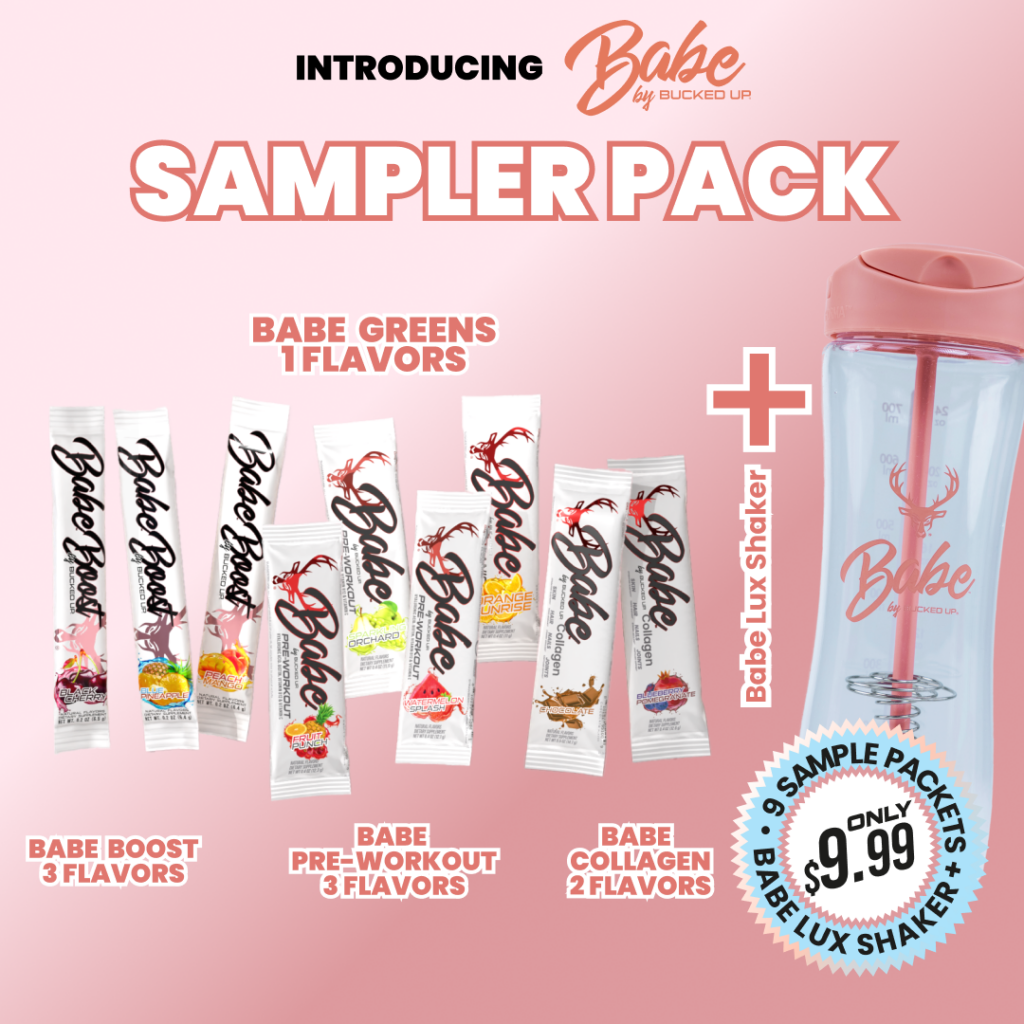
The Babe Collagen product listing is a place to check the actual formula, ingredients and warnings. The study above did not test that retail product. A collagen ingredient list alone cannot demonstrate faster recovery or injury protection.
Likewise, combining collagen with Bucked Up Original Pre-Workout has not been shown by that study to create a recovery advantage. The exact Miami pre-workout panel reviewed for this article lists 200 mg caffeine per scoop; it is a separate product with separate directions.
Why the picture shows whey
The pictured Buck Feed Original Swole Whip is included as a whey comparator, not as a collagen product. Its reviewed label lists 25 g protein per 30.9 g scoop from a whey isolate/concentrate blend and states that it contains milk. Those facts apply to the identified flavor.
Start by checking whether meals already supply enough protein. The NIH supplement guide explains that food can meet protein needs; a powder is an optional way to fill a gap. The product photo does not show the powder used in the trial.
A practical takeaway
Choose an outcome before choosing a supplement: meeting a protein need is a different purchase decision from seeking relief for persistent pain. Ongoing pain or a suspected injury calls for appropriate clinical assessment, rather than a recovery-product promise.
Use the Bucked Up shopping link to compare the products against the specific nutrition or training question you are trying to answer.
Product-label reference: manufacturer’s product page. Evidence reviewed October 10, 2026. Check current prices and offer terms at checkout.