Affiliate disclosure: We may earn a commission from purchases through the product links below.
Hyaluronic acid, also called hyaluronan or HA, occurs naturally in skin and joint fluid. Its normal role in the body helps explain researchers’ interest in it. That role does not establish that an oral supplement goes directly to a joint, instantly lubricates it or speeds recovery after a hard session.
Oral, topical and injected HA are different
A capsule or powder is not equivalent to a skin serum or an injection delivered by a clinician. Route, molecular size, dose and formulation affect what is being tested. An advertisement should not borrow an injection outcome to sell an oral sports supplement.
The joint evidence needs context
In a 12-month trial, 60 people with knee osteoarthritis received 200 mg HA daily or placebo, alongside instructions for daily quadriceps exercise. Both groups improved. Some between-group advantages appeared in a younger subgroup early on and were no longer significant at the later assessments.
That is a limited, condition-specific finding. It does not establish a generally effective dose for healthy lifters, protection from injuries or faster recovery between workouts. A painful joint also has many possible causes that cannot be identified from a supplement label.
The skin research asks a separate question
A 12-week trial in 60 Japanese adults tested two molecular weights of HA at 120 mg daily and found benefits for some wrinkle measurements. More recently, a 150-person randomized trial tested a specific sodium hyaluronate preparation at 60 or 120 mg daily and reported improvements in measured skin hydration and other outcomes, with stronger results at 120 mg.
These findings are promising but formulation-specific, and ingredient-industry involvement is relevant. They are not proof that an HA-containing pre-workout improves skin to the same extent, or that improved skin hydration means improved tendon healing.
Compare the linked doses carefully
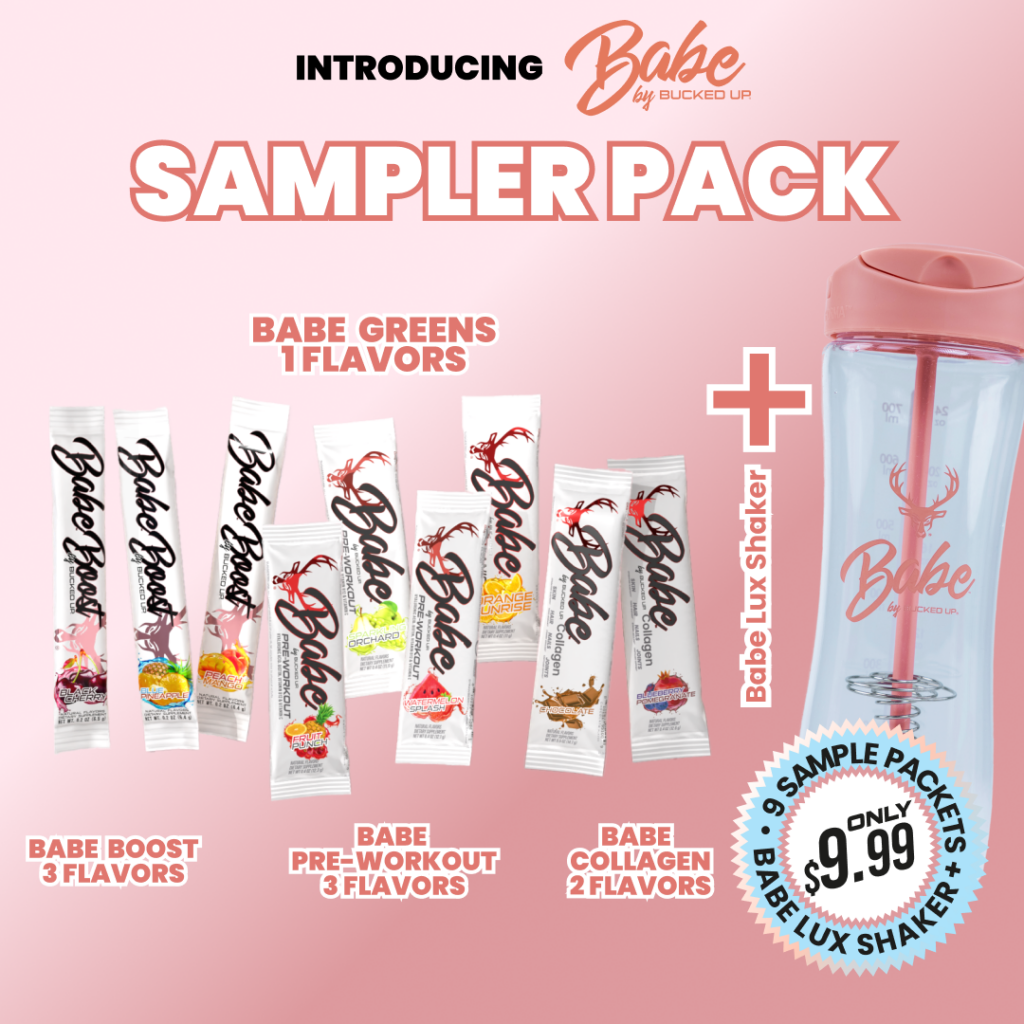
The current Babe Pre-Workout page lists 100 mg HA per serving. It also lists 5,000 mcg biotin, which can interfere with some blood tests. Tell your care team about the full product before testing.
Babe Collagen lists 20 mg HA alongside 11 g collagen hydrolysate and 60 mg vitamin C. Its HA amount is not the same as the 120 mg or 200 mg protocols described above. Do not increase servings or combine several products just to reach a research dose: that increases every other ingredient too.
Neither label demonstrates that collagen, vitamin C and HA have an added clinical benefit together beyond their separate effects. Shared biological roles are not a finished-product comparison trial.
Questions worth asking before use
- Is the goal cosmetic skin hydration, a diagnosed joint problem or a vague “recovery” promise?
- Was the study oral, and did it use the same formulation and dose?
- Does the full label contain other ingredients or allergens you need to avoid?
- Is there a reason to seek individual advice, such as pregnancy, nursing, medicines or an ongoing medical condition?
Seek assessment for persistent joint pain, new swelling or an injury. No oral HA product should be used as permission to train through worsening symptoms. If supplementation still fits your goals, compare price and ingredients and inspect the current Bucked Up offer; benefits and promotional savings are not guaranteed.